タント•タンタ•シラオイ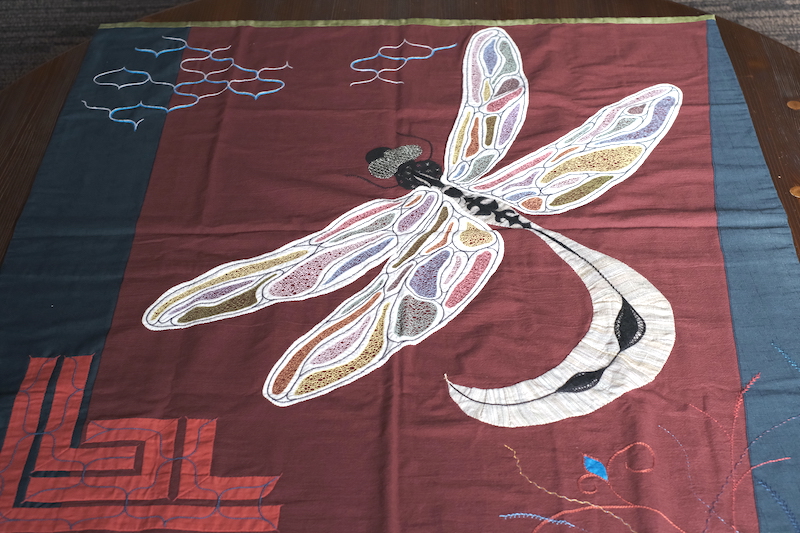
I first met Hiromi when I attended one of her Ainu embroidery classes.
I remember being impressed by how skilled you are at drawing.
I really enjoy designing pieces and Ainu patterns.
But I hated sewing! I couldn’t even sew on a button!
What? You’re kidding right?
I’d never have known that—you make such elaborate sketches and sophisticated designs!
I’m serious!
I never believed I could do embroidery.
But when I saw the embroidery at the Ainu Museum [now Upopoy], I was in awe.
Wow!
Now I’m really curious about how you started your career in Ainu embroidery!
Contents
First encounter with embroidery
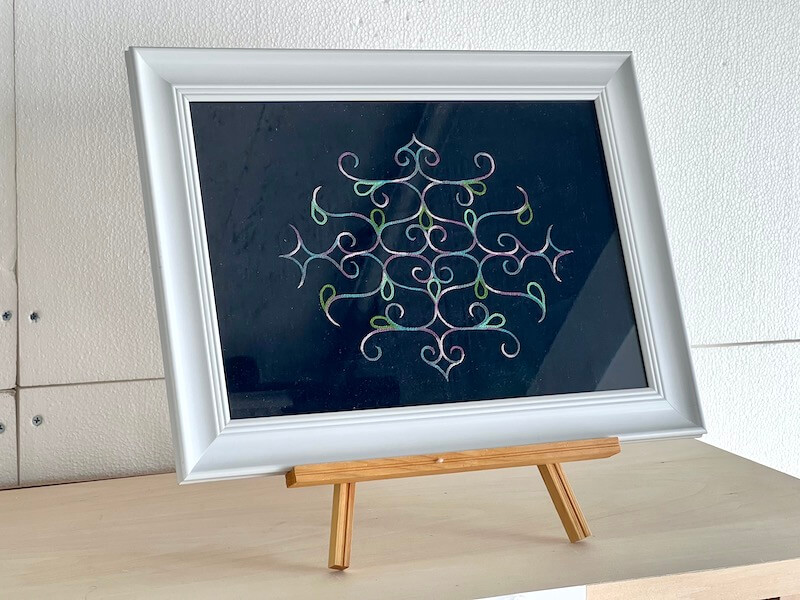
Hiromi first learned how to do Ainu embroidery from Toshiko Hayashi, who taught her during a job training course.
At the time, she was working while raising a child, and would spend whatever free time she had attending short embroidery courses.
Hiromi didn’t attend any embroidery classes or the like when she was younger—she didn’t have time.
Then in her 30s, after learning embroidery during a three-month job training course, Hiromi found out about a project to reproduce elements of Ainu culture at the Ainu Museum that later became Upopoy.
Hiromi took the plunge, quit her job to apply for the project and became involved in making reproductions of traditional Ainu clothing.
In the application criteria, it actually said that applicants must have experience making at least five kimono.
I hadn’t even made one!
But I had made some pieces like a short coat and table centerpiece, so I took everything I had made to the interview, told them that I had quit my job and they hired me!
That’s amazing! You just dived right into the world of Ainu embroidery!
Under the guidance of Reiko Kawagishi, I was able to faithfully reproduce an old item of clothing down to the stitch count, which was a great experience.
But, due to financial difficulties, I quit the reproduction job and returned to the kind of work I had been doing before.
So after that, you refined your skills by attending various classes?
I was surprised to hear that you would always make two pieces at the same time, the one you were doing in class and a replica at home.
The instructor taught me that if I don’t do that, I won’t be able to remember the steps. So, I always followed that rule!
Such a hard worker!
I can rarely complete one piece.
Embroidery takes such a long time!
I could only attend short courses because I was working and raising a child.
But that gave me the opportunity to learn from various teachers.
Each one changed my style of embroidery.
I used to be really particular about having everything in perfect symmetry, and having fine stitches.
But as I’ve learned more about our old ways of drawing and design methods, I’ve grown to love a more rustic kind of expression.
From those humble beginnings, Hiromi has gone on to win many outstanding awards in competitions.
Awards
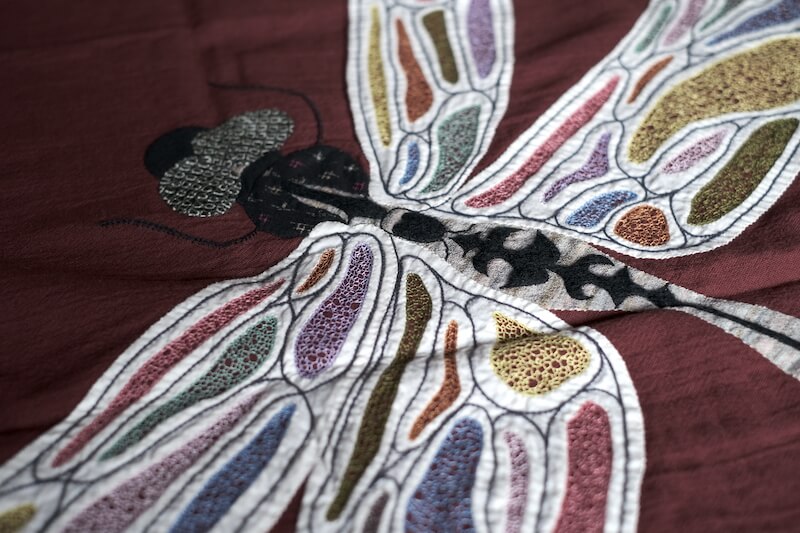
2016 Traditional Craft Division: Award for Excellence (Kaderu Award), Ruumpe (cotton clothing)
2017 Traditional Craft Division: Encouragement Award, Ruumpe (cotton clothing)
2020 General Craft Division: First Prize (Governor of Hokkaido Prize), Tapestry
First encounter with leatherwork
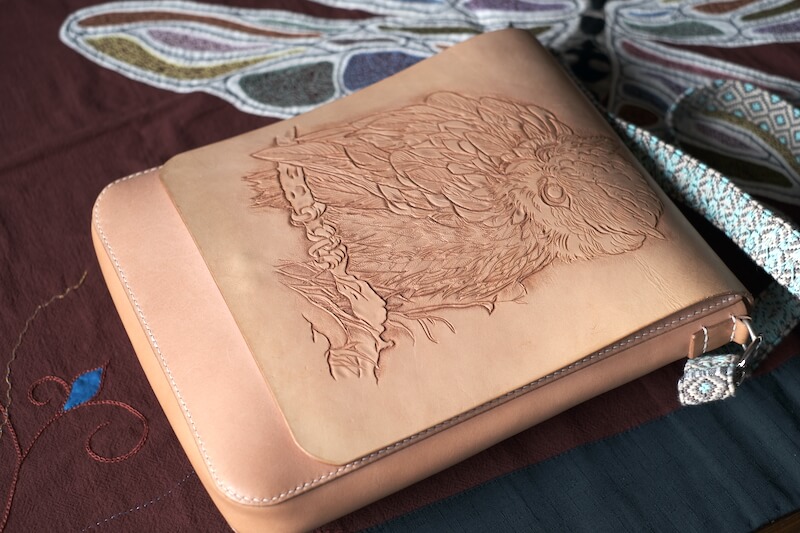
Hiromi first came across leather craftwork about 30 years ago.
She learned how to do leathercrafting from 名 Hanawa during her three-month job training course at the Ainu Association of Hokkaido.
After that, Hiromi joined a leathercrafting club that was started by another person who joined the leathercrafting classes.
She was in the club for a year, but she struggled to attend their 6pm meetings as she was raising her child at the time. She eventually quit and started teaching herself.
But when the Hoshino Resort Hotel KAI Poroto was completed in Shiraoi, that piece of work that I made 30 years ago caught the eye of the hotel’s management.
I couldn’t believe it! But they made a very gratifying offer, so I agreed to make pieces for them.
That’s how you started making leatherwork again, right?
I am starting over with a blank slate, learning about new leatherworking techniques and relearning things like polishing methods and the nature of leather.
I am currently studying under 名 Oriuchi in Shiraoi and 名 Oyama in Tomakomai.
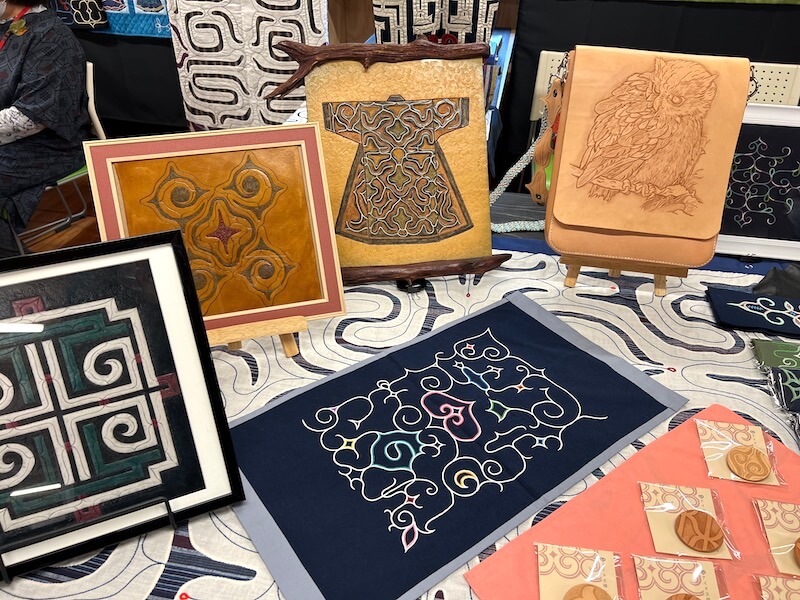
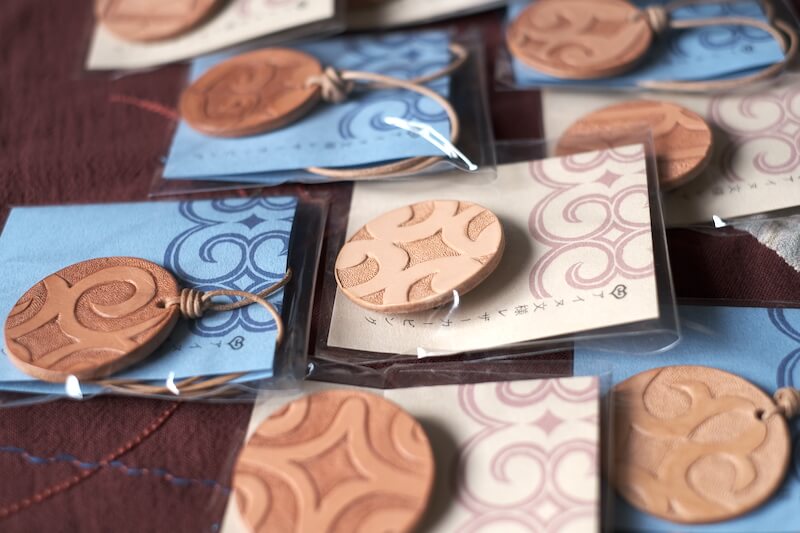
What’s more, the Upopoy staff member who saw my work at KAI Poroto suggested that I make some items to be sold at Upopoy.
So now Upopoy is selling leather brooches and framed embroidered works that I’ve made.
Work with the Ainu Association of Hokkaido
Hiromi was heavily involved in the women’s department of the Ainu Association of Hokkaido, formerly known as the Hokkaido Utari Association.
As there were not many young people, she was also actively involved in helping with events.
Nowadays, the Cep Festival in September only lasts one day, but in the past it would last for two days, with everyone dancing together.
Even when we held a general meeting of the women’s department, we would all dance together merrily after taking a bath.
So, you’ve been involved in the activities of the Ainu Association of Hokkaido ever since you were young.
I can see now that your deep knowledge of Ainu culture allows you to create wonderful works of art with a variety of materials!
Exhibitions
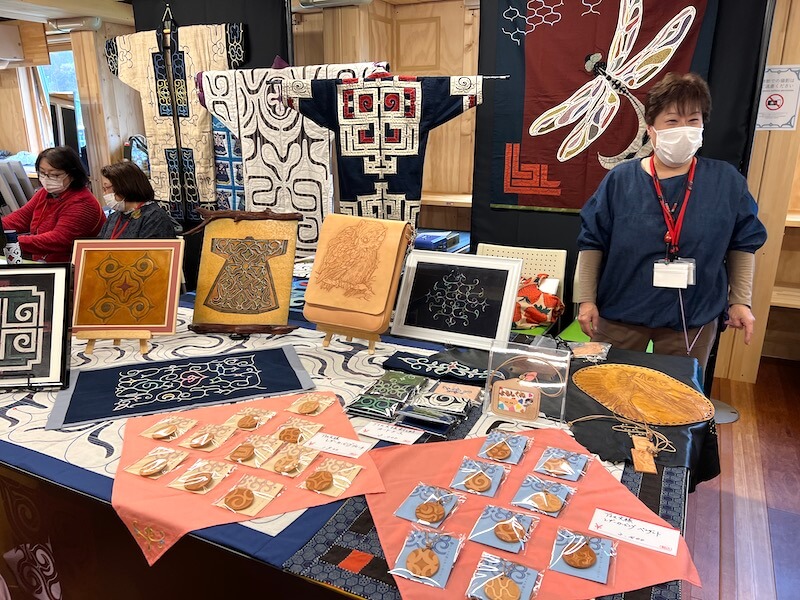
Hiromi held an exhibition called Koten Koten together with fellow artist Sachiko Yoshikuni at Cikisani.
The exhibition’s name is a cute play on words that uses the Japanese word koten, solo exhibition, twice to represent both exhibitors.
Hiromi has also participated in an exhibition and sale at Upopoy in 2022, along with group exhibitions by the Ainu Association of Shiraoi office Noski, and the Ainu café Pirasare.